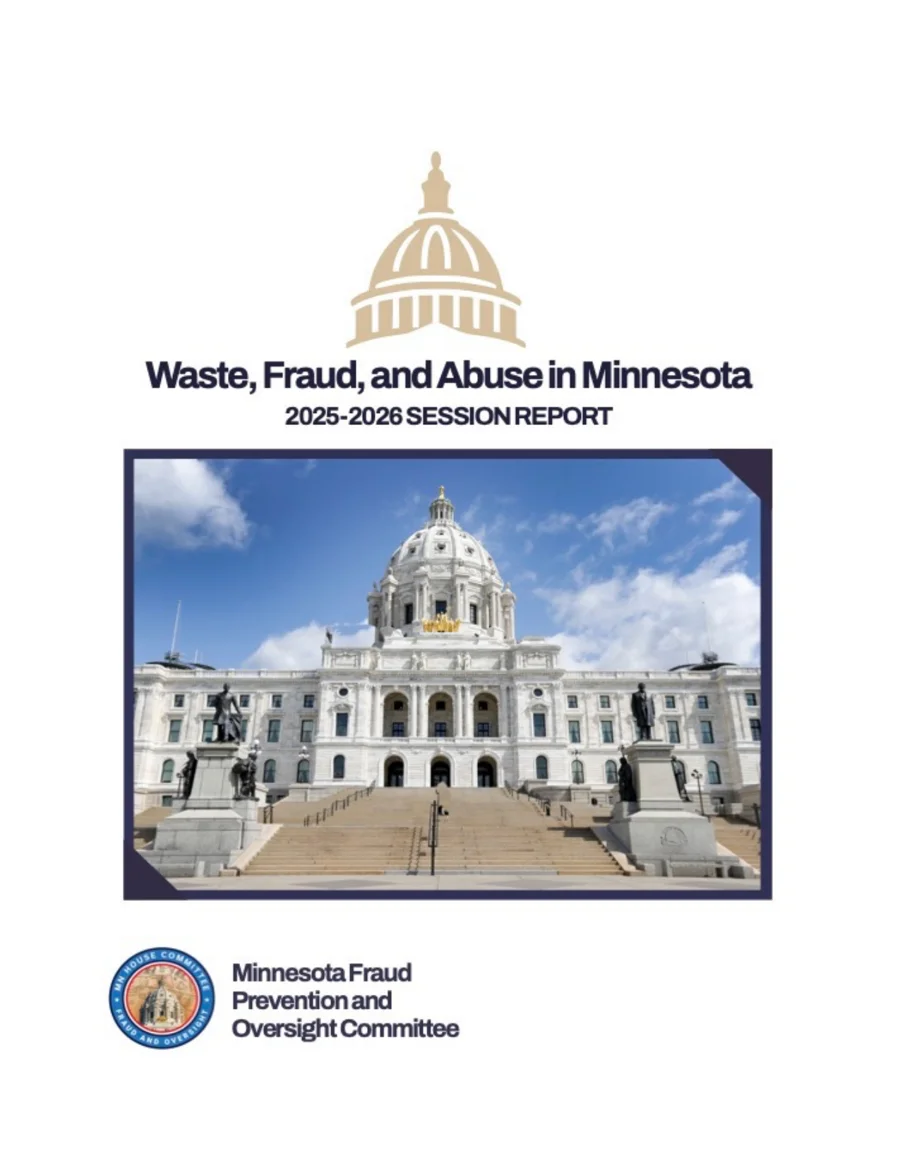

Cover of Waste, Fraud, and Abuse in Minnesota, the House Fraud Committee's 2025-2026 report

The report

Waste, Fraud, and Abuse in Minnesota

Twenty-five hearings. Whistleblowers on the record. Eighty-four pages that name the programs, the warnings and the gaps. The Minnesota House Fraud Prevention & State Agency Oversight Committee adopted its report on May 13, 2026.

Read the reportSearch the text

Rep. Kristin Robbins

Chaired by Rep. Kristin Robbins. She ran every hearing, sent the agencies the providers her staff had flagged, and presented the network map herself. Her work · Thank the committeePhoto: Minnesota House of Representatives

“I don't make these generalizations in a hasty way. When I say a significant amount, I'm talking on the order of half or more. But we'll see. When I look at the claims data and the providers, I see more red flags than I see legitimate providers. And overwhelmingly so.”
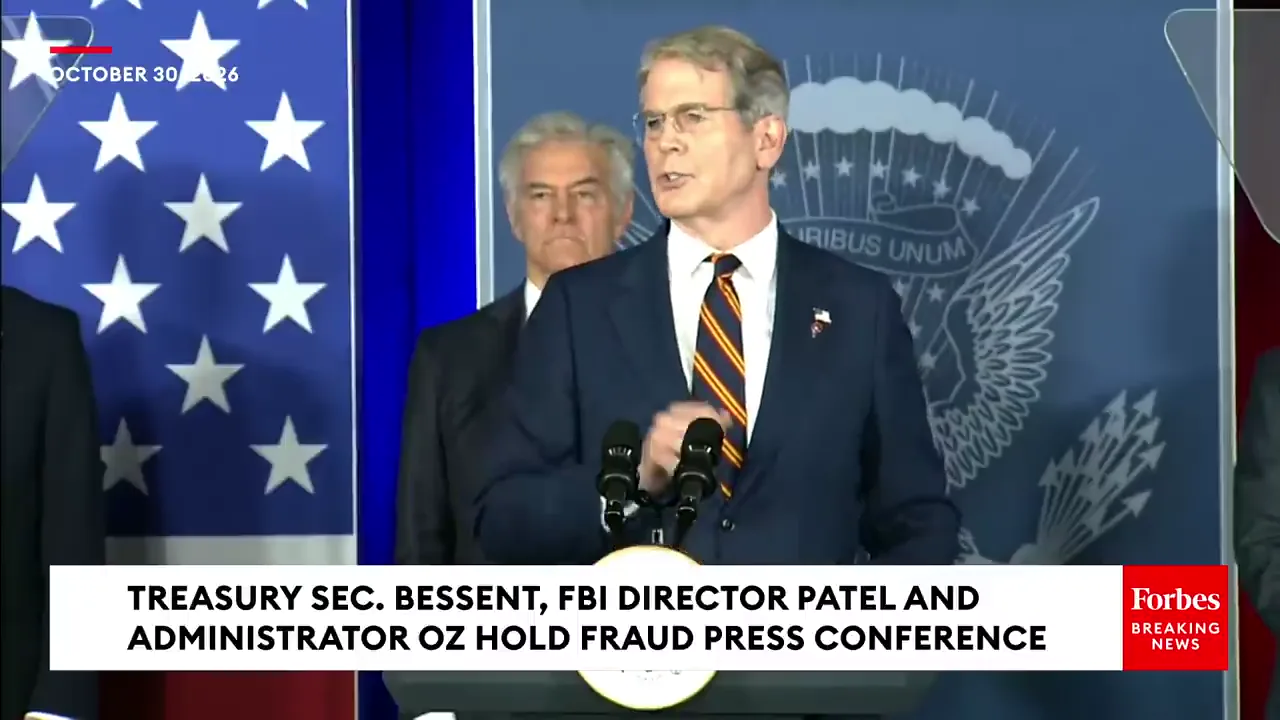
Joseph H. Thompson, First Assistant U.S. Attorney, District of Minnesota · December 18, 2025 · Thompson press conference, FOX 9 live

Source: FOX 9 Minneapolis-St. Paul · watch the original on YouTube. Played here unaltered except as noted on this page; rights remain with the publisher.

Latest

How it happened, in seven chapters

In the order the committee's chair tells it. Each chapter has a video, the facts in one minute, the committee's own charts, and every record behind it.

  1. Chapter 1 · 2011–2019Daycare Fraud BeginningsAn investigator warned in writing in 2017. In 2019 the unit that was catching the fraud was shut down.
  2. Chapter 2 · 2020–2022UnleashedHow a 2020 waiver law opened the doorPandemic waivers took the guardrails off child nutrition. People from the child-care cases turned their centers into meal sites.
  3. Chapter 3 · 2019–2026One Network, Many SchemesThe same people ran child-care centers, meal sites, group homes and autism clinics, often from the same addresses.
  4. Chapter 4 · 2018–2025The Medicaid ExplosionFourteen Medicaid programs grew from $1.5 billion to $4.3 billion a year. Prosecutors put the fraud at half or more.
  5. Chapter 5 · 2017–2025Warnings IgnoredAuditors, investigators and whistleblowers warned for years. Hearings were discouraged, critics were called racist, and no one was fired.
  6. Chapter 6 · 2022–2026ExposedRaids, a federal claims file, twenty-five committee hearings, Congress, and the Cabinet in St. Cloud: more than a hundred people charged.
  7. Chapter 7 · 2026–What Comes NextAn Inspector General funded only through June 2027. A limitations clock running out. And paid family leave, the next frontier.
$18Bbilled by the 14 high-risk programs since 2018, per the CMS pull Thompson read
half or moreThompson's reading of that file, December 18, 2025
$1.51B → $4.32Bthe 14 programs, 2018 to 2025
$6.1M → $443Mautism services (EIDBI), 2018 to 2025
~$250Mcharged loss in the meal case; Bock: 500 months, $243M restitution
64 → 36assistant U.S. attorneys in the Minnesota office
Program spending, millions of dollars. DHS extract via Freedom Foundation of Minnesota (Apr 13, 2026) and Minnesota Reformer (Apr 21, 2026). Blank years were not itemized.
01,0002,0003,0004,0002018201920202021202220232024202514 programs ($M)EIDBIICSHSSNight supervision

Charged dollars are the floor. The claims file is the measurement. They are different numbers and this site keeps them apart.

Scott Stillman, 2017The DHS investigator who warned in writing, and said it again under oath.How it happenedThe mechanism in ten steps, in the committee's own words.What changed, and what didn'tThe Inspector General is funded through June 2027. Every reform, sourced.Thank the Fraud CommitteeEvery member, with official contact details.